
Starting Strong: Turning Arrival Time into Learning Time

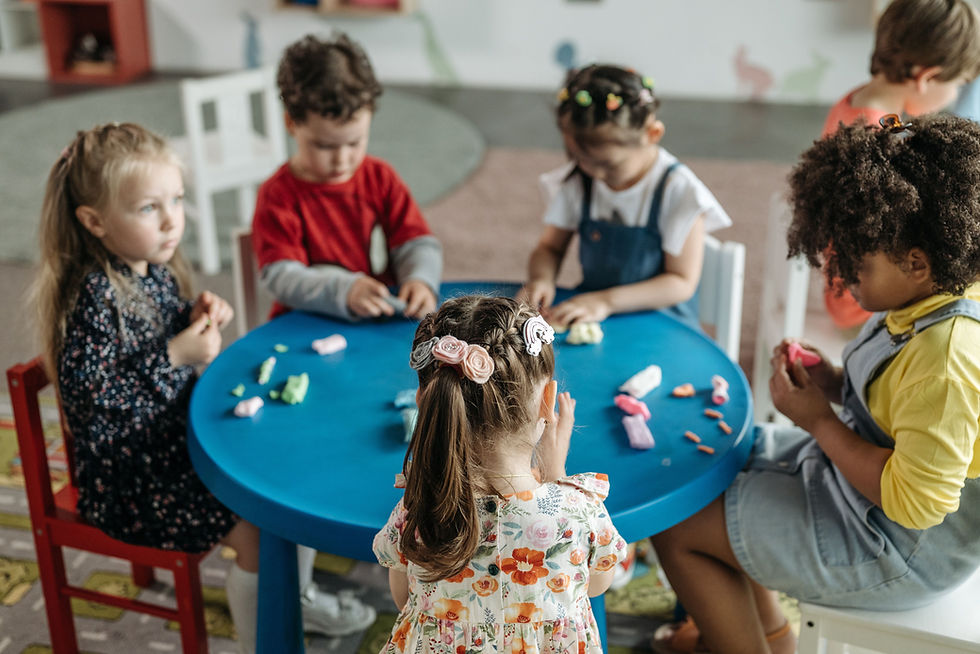
The first hour of the early childhood day is often viewed as a transition period before formal instruction begins. However, with intentional planning, morning routines can become one of the most meaningful learning opportunities of the day. In many programs, children begin arriving as early as six or seven in the morning, while breakfast may not be served until eight or nine o’clock. During that time, teachers are greeting families, checking attendance, preparing materials, organizing meal counts, setting tables, and managing the many responsibilities necessary to start the day smoothly. Although these tasks are essential, they should not come at the expense of children's learning. Instead, arrival time can be transformed into an opportunity for children to explore, make choices, build independence, and engage in meaningful interactions before the official lesson begins.
Why Arrival Time Matters
During classroom observations, I have noticed how differently arrival time is used from program to program. In some classrooms, children go directly to the carpet. In others, they are offered a few manipulatives at a table or directed to a quiet area while teachers complete morning responsibilities. Very few classrooms provide children with choices during arrival, and even fewer intentionally engage them in purposeful learning experiences. Although these routines may create a calm and manageable environment, they can unintentionally limit children's opportunities for engagement and learning. With intentional planning, arrival time can become an extension of the learning day, supporting development across all domains. When teachers approach arrival with the same intentionality they bring to the rest of the day, these early moments can become rich opportunities for exploration, choice, independence, and learning.
Turn Everyday Routines Into Learning
One way to strengthen arrival time is by slowing down and looking closely at the routines already happening in the classroom. Rather than adding complicated new expectations, teachers can identify everyday tasks and transform them into meaningful roles for children. Arrival does not have to be a passive waiting period; it can become an intentional part of the daily schedule. The first children who arrive might become the friend counter, the greeter, or a helper responsible for preparing part of the room. These responsibilities keep children engaged while fostering safety, responsibility, independence, and a sense of community. By inviting children to contribute from the moment they arrive, teachers communicate that every child has an important role in the classroom.
A Purposeful Start to the Day
Imagine this: The first child who arrives receives a clipboard and becomes the friend counter. Each time a classmate enters the room, the child makes a small mark on the paper. Throughout the morning, the teacher checks in to compare the child’s count with the number of children present. Later, during circle time, the class reviews the count together, talks about who is present, and notices who may be absent. Another child serves as the greeter by offering friends three greeting choices, such as a wave, a high five, or a verbal greeting. Each arriving child chooses how they would like to be welcomed.
These two simple activities demonstrate how intentional arrival routines can transform unengaging wait time into meaningful learning opportunities. Through these experiences, children practice counting, mark making, decision-making, communication, turn-taking, social awareness, and responsibility. Teachers can easily scaffold the activities based on children's ages and developmental levels, making the experiences accessible for some children while providing additional challenges for others. With a small shift in planning, what was once passive supervision becomes an opportunity for instruction, connection, and community building.
Building Responsibility and Confidence Through Productivity
There are many other ways to involve children in meaningful arrival routines. For example, tables need to be cleaned and prepared for breakfast each morning. Rather than completing these tasks alone, teachers can invite the next two children who arrive to take responsibility for setting the tables with appropriate materials. Child-safe spray bottles should be stored in a location that is both accessible and easily recognized by children. Towels, paper products, and place settings should also have consistent locations, so children know where to find them independently. As children prepare the tables, teachers can review the menu and ask questions such as, “What do we need on the table today?” or “How many places should we set?” The key is to avoid rushing the process. When children begin preparing for breakfast early, the routine becomes calmer, more purposeful, and less stressful when the food arrives.
Classrooms vary in size and arrangement, but many have smaller tables that are not used for meals. These spaces can be prepared at the end of the day with simple activity baskets ready for the next morning. Another child can be assigned the responsibility of setting up one of these activity areas. The child might select a small-group basket and place it on a table for two or three classmates. Baskets could include matching games, bingo, drawing materials, cutting activities, or other experiences connected to the lesson plan. When activities are simple, intentional, and easy to clean up, they provide children with productive choices while reinforcing planned learning goals.
The sensory table is another valuable area to open during arrival. It can engage two to four children at a time and can often be prepared before teachers leave for the day. If the sensory table includes water, children can help by filling small buckets and carefully pouring them into the table with teacher supervision. This simple routine promotes responsibility, coordination, cooperation, and scientific exploration. It also provides children with another purposeful learning opportunity while teachers continue welcoming families and preparing for the day.
According to Pianta, La Paro, and Hamre (2008), productivity in the classroom is achieved when teachers maximize learning time and establish routines that keep children actively engaged in meaningful learning experiences. By incorporating these types of activities, teachers can establish meaningful classroom jobs and open multiple activity areas. In a class of seventeen children, most children are engaged in purposeful work rather than waiting, wandering, or relying on the teacher for constant direction. During the first 60 to 90 minutes of the day, children practice social-emotional, fine motor, gross motor, cognitive, language, literacy, math, and science skills while taking ownership of the classroom environment. Clear routines strengthen productivity because children understand expectations, know what to do, and have easy access to materials. Providing children with choices, autonomy, and meaningful responsibilities contributes to improved behavior and increased independence. As children are trusted to contribute to the classroom community, opportunities for regard for student perspectives also increase.
Teachers already do so much during the first hour of the day, and the goal is not to add more pressure. Instead, the goal is to recognize the learning opportunities that already exist within everyday routines. Arrival time can become a powerful part of the instructional day when teachers plan for it intentionally. By offering meaningful jobs, purposeful activities and giving children real opportunities to contribute, teachers help children begin the day with confidence, belonging, and engagement. Every moment in the classroom matters, and arrival is one of the first opportunities we have to make learning visible.
High-Impact Arrival Jobs to Try Tomorrow
Door Greeter: Welcomes each child with a choice of greeting, such as a wave, high five, handshake, or verbal hello.
Friend Counter: Counts or marks how many friends have arrived and compares the number with the attendance count.
Table Helpers: Review the menu with the teacher, identify needed supplies, clean tables, and set places for breakfast.
Activity Basket Helper: Chooses and places a prepared activity basket on a table for classmates.
Book Basket Helper: Selects a few books and places them in a cozy area for friends to read during arrival.
References
Pianta, R. C., La Paro, K. M., & Hamre, B. K. (2008). Classroom Assessment Scoring System (CLASS): Pre-K. Paul H. Brookes Publishing Co.


Starting Strong is very insightful, encouraging and educational, making it yet another powerful article.